Showing posts with label Water rates. Show all posts

Friday, June 9, 2017

Selected Morning Star Newsclips - In case you missed them.

----------------------------------------------------------------------------------------------------------------------------------------


Surprisingly, nobody seems to know the reasons for the high price of water. Those in charge are not interested in my opinion but I might be able to shed some light on the reasons for the high cost of water. Here are some of the reasons:

1.     Wasted too much money on altering the recently improved VID system. It needed no changes. Wasted infrastructure cost about $40-45 million.

2.     Overestimated water demand and sized the capacity of the MWP accordingly, significantly increasing costs.

3.     Procrastinated with the MWP. 15 years passed since the original plan was announced in 2002 and it is still not finalized.

4.     Doubled the 2004 Referendum approved borrowing by collecting cash over and above the approved $35 million during the past 12 years.

5.     Ignoring the results of the 2014 Referendum and continuing to collect direct cash from customers in order to avoid going back to ratepayers for their approval.

Those are some of the reasons for the high water rates. Keep watching: those rates will continue escalating and reaching to the stars. 

In contrast, Kelowna is going to solve their identical problem by removing domestic customers for the South East Kelowna Irrigation District (SEKID) irrigation lines and extending Kelowna's domestic water supply from Okanagan Lake to the current SEKID domestic customers. Total estimated cost: $64 million. Learn more about Kelowna's plan here.

GVWU's estimated cost: over $200 million. Wasted time over 15 years. 

More wasted money: continue treating water for agricultural irrigation estimated to be $1-2 million annually. You, the domestic customer foot the bill. The agriculture community does not need treated irrigation water.

Could it be improved? I say yes. Staff say no. An independent reviewer is needed to review the plan and possible alternatives. Kelowna will do it's plan for less than a third of the cost and no wasted water on agricultural irrigation.

Just my opinion now!  

 *************************************************************************************************************************

Wednesday, January 20, 2016

Friday, September 18, 2015

Getting soaked for water!

by | 

If North Okanagan residents feel like they're getting soaked on their water bill, it's because they pay the highest water rates of the Okanagan's three major cities.

Vernon residents pay for their liquid gold per cubic metre, and the cost is set by the Regional District of North Okanagan on a tiered-rate system.

The first 10 cubic metres cost 51 cents each, but it only goes up from there. For 10-20 cubic metres, the Tier 2 cost is $1.07. For 20-40, the charge is $1.22. For 40-80 cubic metres, residents pay $1.53 and, in the top tier, for 80 cubic metres or more, the price jumps to $2.19.

In Kelowna, residents pay $0.412 for the first 60 cubic metres of water; $0.554 for the next 100; $0.84 for the next 90 and $1.618 per cubic metre for the balance used beyond that.

Kelowna also has a bi-monthly flat rate of $24.10.

Penticton communications officer Simone Blais said the southern city charges a fixed rate of $19.77 per month plus a variable consumption charge of $1.67 per 2.83 cubic metres.

The rates also vary from industrial to residential use.

“There are 10 different fixture rates based on your meter size,” she said.

According to Jennifer Miles, water sustainability co-ordinator with the RDNO, there is also an “infrastructure base fee" in the North Okanagan, which is $101.80 per quarter.

"We have to have a base fee that covers the majority of expenses over the year," she said.

However, Miles said it's difficult to compare Vernon to other centres because “different water systems have different treatment systems. We have different sources in Vernon.”

Vernon gets its water from Kalamalka Lake and the Duteau Creek watershed, while several Okanagan communities draw water from Okanagan Lake.

Miles said Kelowna and Penticton have different treatment systems and may have accessed grants over the years to help offset the expenses of building and maintaining water treatment facilities.

------------------------------------------------------------------------------------------------


We do not have to cover the majority of expenses by base fees! That flies in the face of our principle of user pay system. The 2015 budget proposes a 55/45% split in favour of base fees. However, a low water consumer (10 cubic meters or less) can pay as much as 95/5% in favour of base fees. That is the bigger problem here (aside from the selected MWP).
 
*************************************************************************************

Sunday, July 5, 2015

Sunday, May 10, 2015

How much money do you save by conserving water?

Greater Vernon Water Utility customers are strongly encouraged to conserve water. Most customers comply  and believe that by saving water they also save significant amounts of money. They are mistaken. Up to 40 m3 consumption 1 m3 of water only cost customers $1.00 or less per m3.

To demonstrate the actual cost savings let’s compare the bill of customer “a” consuming 10 m3 of water per quarter to that of customer “b” consuming 40 m3.

For 10 m3 the bill would be $106.90 while for 40 m3 it would be $142.09 for a difference of $35.19. For this price difference of 33% customer “a” could use 4 times more water just like customer “b”.

Customers on sewer should be careful in the first quarter of the year where sewer fees are determined based on the first quarter water consumption.

The alternate rate proposal I put forward would distribute rates more fairly. Visit the comparison of the
two systems prepared by Councillor Spiers.

Customers conserving water should be treated fairly for their honest efforts of reducing water usage! My proposed rate system would reflect this principle. With this system customer "a" using 10 m3 of water per quarter would have a bill of $55.60. Customer "b" would be billed for 40 m3 water at $133.19. That is an incentive for conserving water and a reward for doing so. Everyone is treated fairly to boot!

***********************************************************************************************************

Sunday, March 1, 2015

One more word on water rates

Over the years I discussed water rates through articles I posted on this blog. Among others I advanced the financing of Master Water Plan infrastructure borrowing through property taxation similar to financing of other infrastructure borrowings. As an example I used the $35 million approved borrowing for the MWP in the 2004 referendum. Had we used taxation the annual cost of borrowing $35 M would have been about 0.25 mill rate or $100 for a property worth $400,000, a lot less than the current annual tax of $399.20

So far this proposal was rejected at GVAC with the argument that all costs should be recovered through water user fees.

The currently proposed $407.20 base fee, which is actually a very high tax and not based on consumption, would cover the annual general tax of a property worth of about $170,000 in Coldstream using the above 0.25 mill rate. I believe taxation would be a more fair way of financing water infrastructure that is directly connected to each customer's home infrastructure.

You can check out my earlier discussions by searching on the blog with the search words "water rates" entered into the search request area as indicated on the attached snip and click on "enter".

*********************************************************************

Saturday, February 28, 2015

Thursday, February 5, 2015

GVAC Meeting - Budget presentation - February 4, 2015

I have sent the following email to GVAC members prior to above meeting:
 
"It appears I will not be able to attend tomorrow's meeting although I would have dearly loved to do so. I have family commitments which could not be postponed.
 
I would vote against the budget and would make a motion to "have a moratorium on budget items that would go towards projects that were identified in the MWP Referendum". I have difficulty identifying all the pipes and projects that would have furthered the current MWP but staff knows what those are and, hopefully, they would identify such projects. One such project is the purchase of the UVT Analyzer. What is "Capital project contingency.... Is this a slush fund?
 
I would vote against any increase in the budget. Last year we had $2 M for dam upgrade. That is now embedded in the budget.
 
I would not allow any more addition to the reserves until we know where we are going.
 
We have over $7 M in both Statutory and Operating reserves. We should not put in anymore till we get new directions ($736,000).
 
The Water rate calculator is an abomination. We should not determine the rates on a hit-and-miss basis. All those variables (volumes of a,b,c,d,e are estimated each with a potential error term). Using a normal user pay system will reduce the error to the estimated volume of water sale (5,766,696 cubic meters for 2015 and the number of customers "Base  24,325", this latter is not even important). Using the budget need as the "fixed cost" ( we must get all the revenues to cover all the expenditures) we get the true unit cost of water delivered to a customer's tap. To make sure everyone contributes to the costs we should set a minimum fee (access fee of say 10 cu. m.) that every connection must pay. Anyone using more than the 10 cu m will pay by multiplying consumed volume with unit cost.
 
More increase following the 23% increase from last year is a major blow to the citizens of Greater Vernon - like a penalty for voting down the referendum. Had either Vernon or Coldstream increased taxes at this rate there would be different people occupying those seats. So let's give a break to the ratepayers.
 
I am sorry again for missing the meeting but I am sure you will make wise decisions.
 
Gyula"
 
Obviously, the majority of directors believed that a 2% increase was still necessary. I am sure the operation and maintenance portion of the budget contains reasonable coverage of repairs and unforeseen expenses but be it. That was the decision by the majority.
 
***********************************************************************************************************

Wednesday, February 4, 2015

GVAC Meeting - Budget presentation


Further to tomorrow's GVAC meeting please refer to the proposed budget here. Note the proposed 4% across the board rate increase. This would increase the annual base rate from $399.20 to $415.16. A quick calculation of quarterly costs and unit costs at various consumption levels is provided below.


************************************************************************************

Tuesday, February 3, 2015

Sunday, February 1, 2015

Water Budget Tops $20 Million - KISS FM and Kiss' comments

Written by Peter McIntyre  
Thursday, 29 January 2015 18:00 

This year's Greater Vernon Water budget calls for 15 million dollars in operating spending, and 5.5 million dollars for capital projects.

Regional District of North Okanagan Finance manager, Stephen Banmen, says one area of good news is water treatment costs are going down $410,000.

"Within the functional area of water treatment, the largest savings are related to water treatment chemicals ($134,000), utilities ($129,000) and operations and maintenance ($72,000)," says Banmen.

Among the 26 capital projects planned for this year is $660,000 to replace a cast iron water main at 9555 Highway 6 in Coldstream, $600,000 to upgrade a water main on Venebles Way between Aberdeen and Middleton in Coldstream, and $490,000 for Pleasant Valley Road, 41st Ave to 20th Street in Vernon.

Greater Vernon Advisory Committee director Gyula Kiss questioned staff why a $400 a year base fee is charged for water, calling it "a tax that doesn't seem to have any bearing on anything."

Finance manager, Stephen Banmen, says that fee helps cover the fixed costs of running the utility.

In a presentation to the board, Utility Manager Zee Marcolin said 53-thousand residents use the system, and 200 samples of the water are taking each month to ensure the quality.
 -----------------------------------------------------------------------
The "fixed costs" argument is frequently used by finance managers and other staff members. However, they cannot identify which part of the budget is dispensable.

In fact, a budget, by definition, is 100% fixed. Any part of the expenditure ledger not covered by the revenue ledger would create a shortfall and an imbalanced budget. I believe all budgeted items are fixed. If staff can identify any unnecessary expenditures I would be quite happy to eliminate it from the revenue stream.

Based on the above, if we were to cover all fixed items with base fees we would arrive at a point where all customers would pay the same flat fee regardless of their consumption. We used to have that not so long ago. Then we introduced water meters and started to implement small base fees (access fees) and collected the rest of the revenue through user fees. In 2005 the base fee was $25 per quarter or about 26% of total fees yet revenue targets were met. In 2014 base fees increased to $99.80 (which is basically a punitive tax not related to either property values nor water consumption) per quarter shifted to about 53% base fees and 47% consumption. I wonder how a business would survive with a similar philosophy?

Staff is considering spending up to $8.3 M for upgrading the water metering system. Considering how the ratio of fixed fees versus consumption fees is shifting what benefit would this huge expenditure have for the water customers? 

We must remember that we are trying to control consumption and the more revenue is collected from flat fees the less clout we have on the consumption control. Also, the less water one uses the more one pays for a unit of water.

Those are some of my concern with the budget. Other concern relate to the huge capital expenditures (over $5.5 million) at a time when we are still searching for a Master Water Plan that will be acceptable to the water customers.
      
 **********************************************************************************************************

Tuesday, January 27, 2015

GVAC Special Meeting - Budget presentation


 If you are interested in the 2015 water rates you might wish to attend.

*************************************************************************************

Sunday, December 7, 2014

Water woes - and a response - letter to the Morning Star

 Dec 5, 2014 at 1:00 AM

I recently received my third quarter utility bill and the water cost portion of this bill is enormous.
.
Last year when I received the same third quarter bill (which I also thought was enormous), I decided to do something about it and adjusted my water consumption, bringing my water usage down by almost 20 per cent. Guess what?

My bill this year was almost the same as last year.

A review of what has happened here has brought me some interesting results. On March 19, the Regional District of North Okanagan board approved a new tiered fee structure, including the infrastructure base fee, increasing the cost to domestic (residential users) by almost 20 per cent. Yes, almost 20 per cent.

This in the face of inflationary guidelines of two per cent. I guess the cost of water is not included in the calculations for inflation.

Don Graham
Vernon
 ---------------------------------------------------------------------------------------------------------------------

The above letter points out the unusual way Greater Vernon Water Utility charges for water. It charges a consumption fee on a tiered basis and adds to it a fixed tax (called "base fee") of $99.80 per quarter. Up to a consumption of 66 cubic meters per quarter this tax is greater than the consumption cost. At 40 cubic meter consumption the tax is more than twice as much as the consumption fee. This is what we call a "user pay system". It shows that at lower consumption levels there is no incentive to conserve water because the consumption cost is negligible as compared to the fixed fee.

The reason given for this huge base fee is that it must cover "fixed costs". However, I was never given the actual value of fixed costs. In an annual budget there are two ledgers: an expenditure ledger and a revenue ledger. The expenditures must be equal the revenues or else we have a deficit or a surplus. Thus, I believe that the fixed costs are the costs identified in the expenditure side of the budget. If we wanted to cover all the fixed costs by base fees then the base fees should cover the entire budget. In our budget of $17 million the annual base fees would then amount to about $710 per year or $178 per quarter. All customers should then pay the same regardless of consumption (it used to be that way until quite recently - extremely unfair but there were no meters). 

There are major problems with this system aside from being unfair to low consumers: the utility would lose control of consumption. As indicated above the current system is already showing less incentives to conserve water at lower consumption rates, a universal flat rate would be unmanageable. Unfortunately, the current trend of ever increasing base fees is heading in the wrong direction.

In my opinion a conventional user pay system based on unit cost of treatment and delivery of domestic water with a small base fee (that would also be based on unit cost of water) would be the most effective and fairest way of charging for domestic water.

Just for the record, the "base fee" of $399.20 currently charged by GVWU would be the annual General Tax for a property worth $177,000 in Coldstream.

****************************************************************************************************

Sunday, November 9, 2014

Comparing GVWU and Kelowna water rates.


In addition to the consumption rates shown above Kelowna residential water customers pay a parcel tax of $50 and a base fee of $141.60 annually.

A customer using 175 cubic meter per year (GVWU's average consumption figure) equally distributed at 43.75 cubic meters per quarter pays an annual water bill of  $262 per year in Kelowna.

For the same consumption GVWU charges $580 per year. The GVWU customer pays 220% more.

GVWU's annual cost for the same volume of water is expected to rise to $754 ($4.30 per cubic meter) during the next 5 years if there are no other increases in costs such as annual cost of living increases. Those additional costs would add to the annual rate increases.

**************************************************************************

Monday, September 29, 2014

Before you go to tonight's water referendum meeting take a look at this


 ***********************************************************************************


For examples compare costs for users of 50, 100 and 150 cubic meters per quarter:

Greater Vernon:
                    50------$154.30
                  100------$242.30
                  150------$349.80

Kelowna: (quarterly costs)
                    50------$  55.63

                  100------$  81.36
                  150------$108.54

***********************************************************************

Wednesday, August 6, 2014

More about water rates.


Further to my earlier discussions on fair water rates it is educational to have the evolution of water rates reviewed.

In 2003 the rates were set at $24.00 base fee (quarterly) and $0.56 per cu. m. with a 10% discount if paid by the end of the month. This basically reduced the fees to $21.60 base fee and $0.504 per cu. m. consumption fee.

As the attached table demonstrates base fees increased by a staggering 360% since 2003. This base fee increase is in direct contradiction of the “user pay” system. How did we get to this ridiculous situation? I’ll elaborate.

Finance officers like to use flat fees to cover cost of services. It is an easy way to ensure that budgets are balanced regardless of the pain it creates for low volume consumers. Greater Vernon Water staff suggested that we should actually increase the base fee. They would like to have 80% of the budget covered by flat fees or even worse, all of it.

Politicians, however, insist that we are employing the user pay system. Nothing is further from the truth. Low and middle water consumers carry the biggest burden of the total cost. Incidentally, if we were to usage total flat fees each account holder would be paying $712 per year ($178 per quarter). If every customer were charged that rate we would meet our budget requirements. As it is we are already paying over 56% of the fees as base fees.
Staff’s argument in recommending higher base fees is based on their argument that there are “fixed costs” and we must ensure that these fixed costs are covered. That argument is bogus. If we fail to recover any part of the budget presented we will have a deficit, as we have done for the last 3 years (total $3.1 million). The entire budget must be covered by the revenue stream. Since our stated method is the user pay system we must ensure that these revenues are collected through that system. It takes planning but that is what we pay staff for. It is up to the political representatives to ensure that policies and bylaws are enforced.

It is curious that staff did not recommend the same cost recovery system for the agricultural customers. Why not recover 56% of total agricultural fees through flat fees and the rest of it on a user pay system?

We invested millions in water meters so we could institute the user pay system yet we are working towards a universal flat fee system. At the same time we want to reduce water consumption but we punish those who reduce by raising their water rates. Where is the rationale?

Before you vote on the $70 million borrowing referendum make sure you investigate what you are paying for and how! And remember: there was no independent review of the current Master Water Plan!


***************************************************************************

Friday, August 1, 2014

An argument for fair water rates!

Councillor Spiers has developed an online water rate calculator (below) utilizing the complicated water rate system  Greater Vernon staff devised.

The system is composed of a large base fee component ($99.80 per quarter) and a five tier rate scale. In addition special rates apply to Industrial, Commercial and Institutional customers at a cut rate of $1.50 per cubic meters.

By entering your quarterly consumption your actual bill for the quarter is presented. You are also presented with the cost per cubic meter at the bottom of the calculator. Note that the less water you use the higher the unit cost is. This is in direct contradiction of principle d. of the key principles adopted by all parties at the creation of the water utility, namely:

    "d.  All non-agricultural rates would be on a volume basis and uniform throughout the service area."

The intended policy of the utility is to encourage water saving and reward customers for saving water. In reality we punish customers who save water by selling them water at a higher unit cost. A customer who uses no water at all pays $99.80 per quarter for nothing. A low user of 20 cu. m. per quarter is charged $5.77 per cu. m. while a user of 10 cu. m. is paying $10.48 per cu. m. Hardly uniform rates on a volume basis! In contrast a customer using 500 cu. m. is only charged $2.20 per cu. m.

We all agree that everyone within the service area should contribute something for the ability to connect to our system. However, this contribution should be minimal if we believe in the user pay system: you pay for what you use. A true user pay system must be implemented to be fair to all customers.

With this principle in mind a reasonable user pay system would have a minimum rate based on, say, 10cu. m. minimum at the calculated unit cost (in our case $3.20 per cu. m., or $32.00 minimum). All properties within the service area would pay this quarterly fee for which they would be eligible to use up to 10 cu. m. of water.

Customers who use more water per quarter would pay the used cu. m. multiplied by $3.20. Example: consumption of 45 cu. m. would cost $144 (45*3.20). Even the base fee for a lot without structure would be more fair at $32.00 per quarter.   

This system would reward low consumers and charge a fair rate to all customers based on their consumption. Industrial, Commercial and Institutional customers should pay the same rate as everyone else. There is no reason for the general customer to subsidize ICI customers. Water prices are business expenses and tax deductible. 


Most customers use less than 47 cu. m. during the first quarter of the year. Those will all benefit from the true user pay system but still pay the fair rates. Additional consumption is not charged at an artificial subsidized rate but at true cost.

Ask your representatives why they don't support fair user-pay water rates!


2014 ONLINE WATER CALCULATOR

A Calculator where you can interactively enter your quarterly consumption totals in m3 and see your $ increase can be found at:  Rates Effective April 1, 2014


***************************************************************************
Tuesday, July 22, 2014

Back to water: Comparison - domestic customers - irrigation customers!

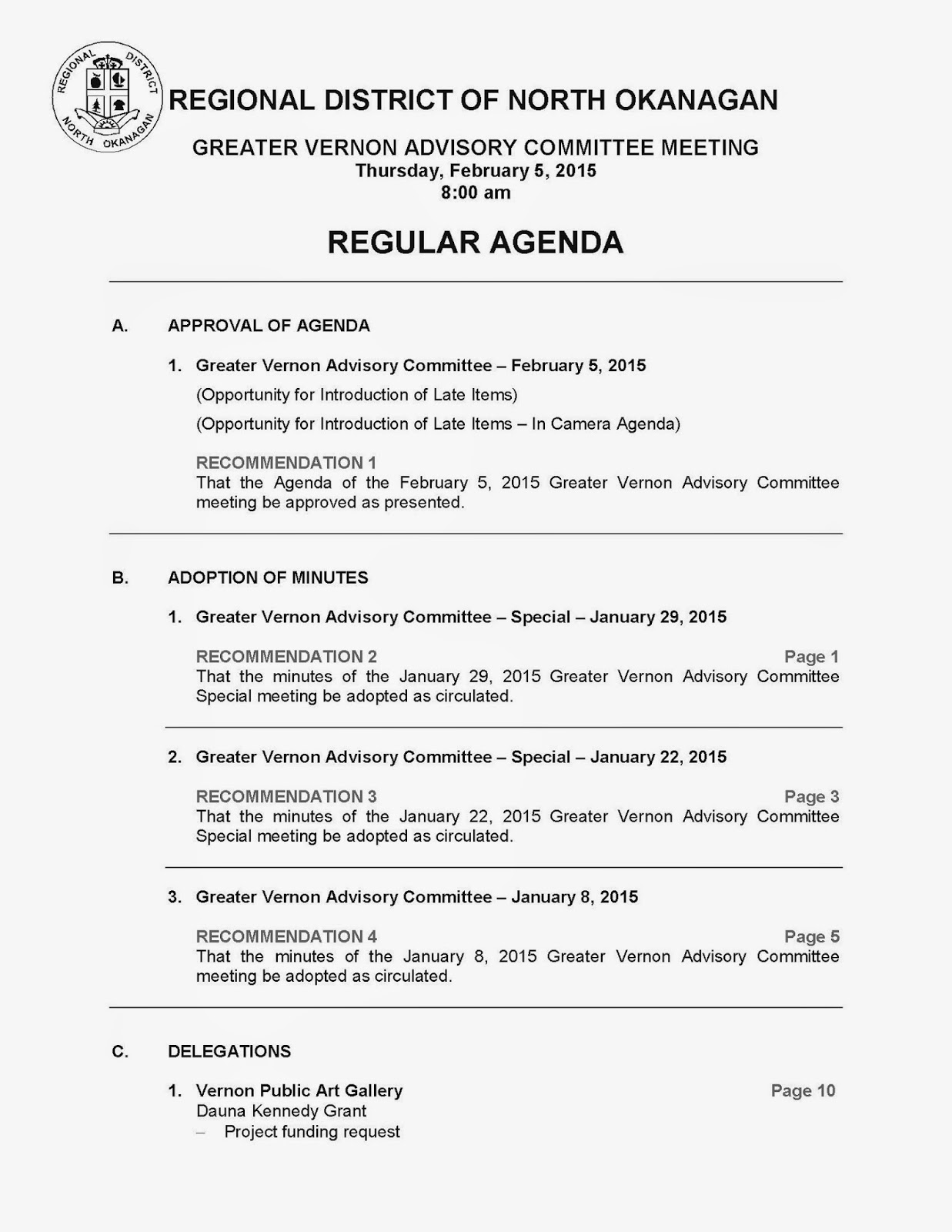
Rules, water rates and budgetary contributions for your information. Are we getting a fair deal?

Domestic customers' rules:


Domestic water rate samples:

           Customers with no consumption:           $99.80
        Customers using 10 m3 per quarter:     $10.48/m3
        Customers using 50 m3 per quarter:     $  3.10/m3
        Customers using 100 m3 per quarter:   $  2.42/m3
        Customers using 1000 m3 per quarter: $  2.18/m3
        ICI customers pay:                                $  1.50/m3 plus $99.8 access fee


---------------------------------------------------------------------------------------------------------------------

Irrigation customers' rules:


Water rate:  ~$0.07/m3  domestic quality treated water!

Budget contributions:

      Total budget:           $ 18,600,000       100.00%
      Agriculture:              $     904,452           4.86%
      Other income:         $      600,000           3.23%

      Domestic plus ICI:   $ 17,095,548         91.91%
 

*****************************************************************************************        

Coldstream Ratepayers News! All Coldstream residents are ratepayers!

The opinions expressed by "Coldstreamer" are strictly his own and do not represent the opinions of Coldstream Council!

Because I value your thoughtful opinions, I encourage you to add a comment to this discussion. Don't be offended if I edit your comments for clarity or to keep out questionable matters, however, and I may even delete off-topic comments.

Gyula Kiss
coldstreamer@shaw.ca;

***Coldstreamernews***

***Coldstreamernews***
We must protect our rights and freedom! (Photo courtesy of D. Gibson) Click on eagle to watch EAGLECAMS

About Me

My photo
I have been a resident of Coldstream since 1976. I have had 15 years of experience on Council, 3 years as Mayor. As a current Councillor I am working to achieve fair water and sewer rates and to ensure that taxpayers get fair treatment. The current direction regarding water supply is unsustainable and I am doing all I can to get the most cost effective water supply possible.